MADAGASCAR
What is the typical vegetation of Madagascar?
Madagascar is an island in East Africa, located just below the Tropic of Capricorn, between the Indian Ocean and the Mozambique Channel. 80% of its vegetation is endemic to the island: Madagascar is home to one of the richest floras on the planet, spread across various environments and ecosystems, many of which are nearly unique in the world. From north to south, east to west, explore an overview of Madagascar's diverse vegetation.
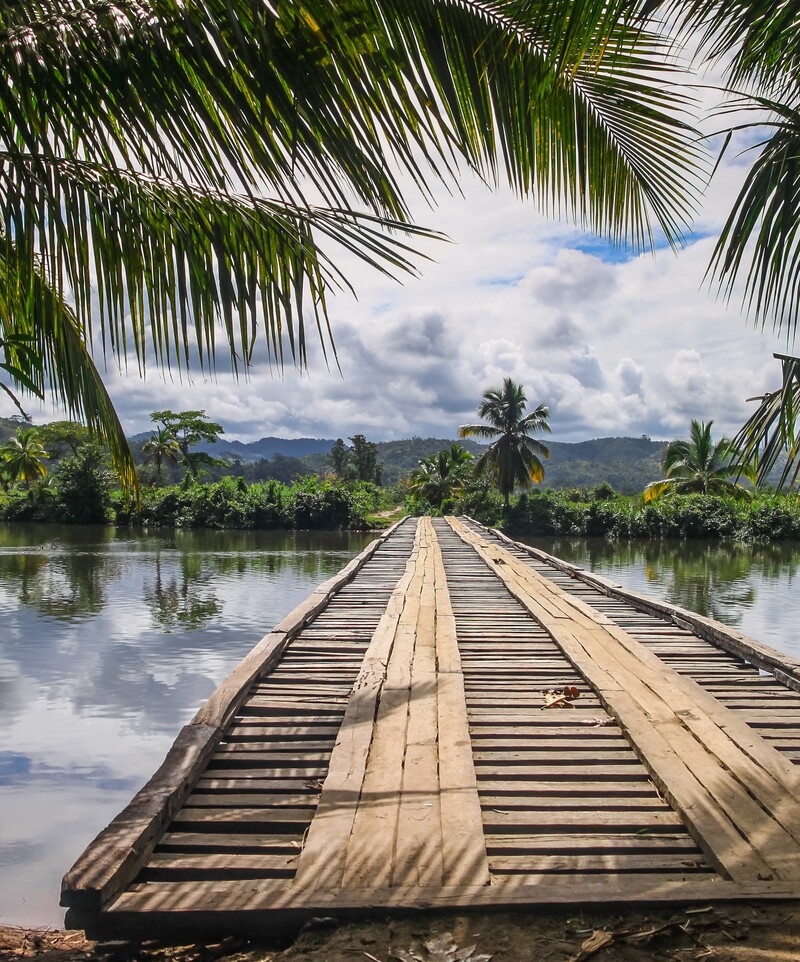
On Madagascar’s East Coast: The Dense Humid Forest
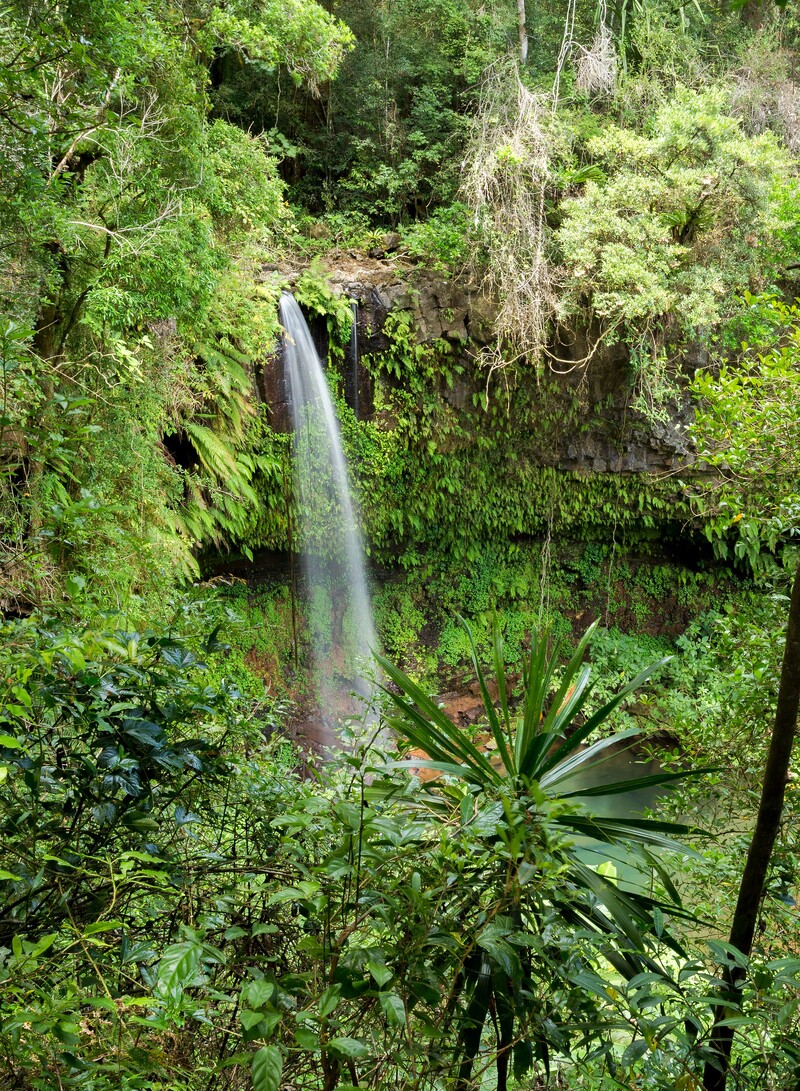
Facing the Indian Ocean, Madagascar’s east coast receives heavy rainfall, which has given rise to 6 million hectares of tropical rainforest. This forest stretches along a narrow coastal strip at low altitude—below 800 meters.
The closely packed trees can reach up to 30 meters in height. They are known as "evergreens": they retain their green foliage throughout the year.
Dalbergia, Uapaca, Symphonia… the tallest species form a high canopy. These plants capture maximum sunlight, allowing very little to reach the forest floor, which remains relatively dark. In the lower layers of the forest, you’ll find the iconic pandanus, various palm trees, and especially a vast number of orchid species.
In terms of both fauna and flora, this ecosystem is considered one of the richest in biodiversity on the planet. Although it covers only 7% of Madagascar’s land area, the dense humid forest holds 70% of the island’s known species, 80% of which are endemic.
Madagascar’s dense humid forest is among the most threatened in the world. Only a third of the primary forest remains. To protect these unique ecosystems and their biodiversity—and to raise awareness among visitors—numerous protected areas have been established. Eastern Madagascar is home to many national parks known for their natural richness, several of which are UNESCO World Heritage Sites.
Ranomafana National Park is one of the best examples. Located on the border of the Haute-Matsiatra and Vatovavy Fitovinany regions, this park was created in 1991 and is part of the UNESCO-listed Rainforests of the Atsinanana. Its lush, dense rainforests span 41,600 hectares. Visitors can discover bamboo forests, pandanus, and countless orchids. The fauna is equally remarkable. With binoculars in hand, you might spot species like the red-bellied lemur, the small-footed brown lemur, or the black-and-white ruffed lemur, as well as around 115 species of birds, including Henst’s goshawk, Meller’s duck, and the crested ibis.
On Madagascar’s West Coast: The Dry Tropical Forest and Mangrove
Madagascar’s dry tropical forest covers 2,580,000 hectares along the western coast of the Red Island, up to around 800 meters in altitude. Much more sparsely wooded than the forests in the east, the trees appear to rise out of the savannah. These are mostly baobabs, tamarind trees, and palm trees. Among the thickets, you may occasionally spot a few land tortoises.
Like the dense humid forest, this is a highly threatened ecosystem, suffering from wildfires and intensive agriculture.
Kirindy Mitea National Park, with its 72,200 hectares designated as a UNESCO Biosphere Reserve, is a great example of dry forest. Accompanied by a local guide, you can explore a variety of landscapes—primary dry forest, mangroves, riparian forest (along waterways), bays and beaches, dunes, and islets. Most animal species found here are endemic, including 11 mammal species, 47 bird species, 23 reptile species, and 50 fish species. The park's flora is also highly diverse, with 182 species of woody plants, 3 species of baobabs, 5 types of rosewood, and 7 species of mangroves.
For a truly unique experience in a canyon-filled reserve, head to the Tsingy de Bemaraha National Park. From Belo, you’ll drive along a forest track to Bekopaka, then cross the Manambolo River by boat. You’ll witness an exceptional natural landscape of limestone spires, river gorges, hills, and towering peaks. The park is home to an incredible variety of flora and fauna: keep an eye out for the white-throated rail, the elusive aye-aye, or the armored Brookesia perarmata chameleon among 650 plant species.
Along the western coastline, right at the water’s edge, lies the mangrove—one of the most biodiverse ecosystems on the planet. It covers approximately 300,000 hectares.
Mangroves and mango trees are its most iconic species. Their tightly woven root networks rise above the water’s surface, providing shelter for numerous aquatic species. Protecting them from currents and predators, and rich in sediments and algae, the mangrove serves as a vital nursery. It is also home to seabirds, reptiles, mollusks, amphibians… Though particularly well adapted to harsh conditions, mangrove vegetation remains fragile.
In Northern Madagascar: Between Sea and Forests
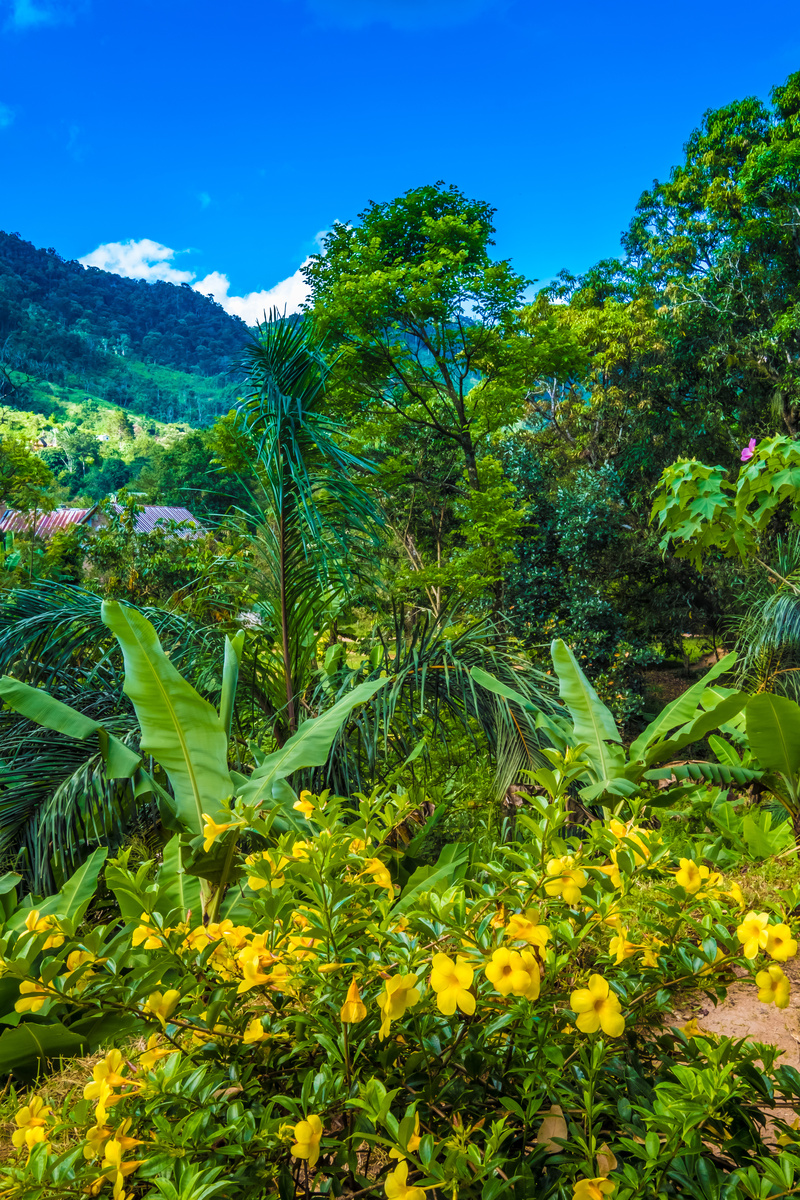
Northern Madagascar is where the blue of the sea meets the green of the tropical forests.
Mananara-North National Park is divided into two parts: a 24,000-hectare national park and the Nosy Antafana Marine Park, which covers 1,000 hectares and spans three islets—Nosy Antafana, Nosy Ranfonsty, and Nosy Hely. The marine park boasts exceptional biodiversity, including 10 km² of coral reefs. The Mananara forests are home to 77 bird species, 136 species of herpetofauna, 13 species of lemurs, and 17 species of rodents. The plant life is highly diverse, with 114 species of marine flora, 7 species of mangroves, 764 species of primary forest, and 436 species of modified forest.
Baly Bay National Park, located in northwestern Madagascar, is also home to both marine and terrestrial flora and fauna. It is crossed by the Kapiloza and Andranomavo rivers, which flow into the Mozambique Channel. The park spans 57,142 hectares and hosts exceptional vegetation: 129 plant species have been recorded, including many woody plants. The star species of the park is the Angonoka or ploughshare tortoise, which is endemic to the bay. The Madagascar fish eagle, classified as an endangered species, can also be found here.
In the Heart of Madagascar: Savannah and Bushland
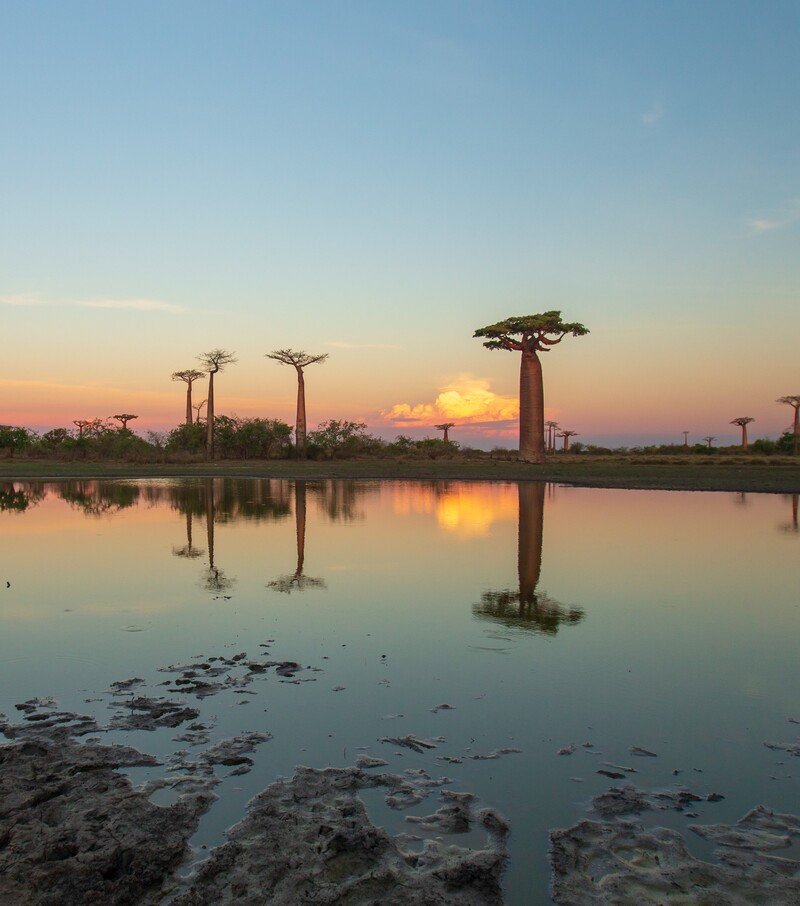
The heart of Madagascar is made up of vast expanses of grassy savannah. Tall grasses grow alongside baobabs and a few thorny plants such as succulents and euphorbias. Unlike other Malagasy ecosystems, this area is not known for its high biodiversity, but its ochre-toned landscapes remain spectacular.
At the southern tip of the island lies a bushland that feels almost like Australia—yet 80% of the species here are found nowhere else on Earth. Spanning 3,000,000 hectares, this region features low-growing forests of bushes and thorny thickets, primarily composed of euphorbias, didiereaceae, and apocynaceae. Perfectly adapted to arid soils, the vegetation grows close to the ground and has developed specialized ways to store and conserve water: rhizomes, waxy or glossy leaves—like aloes and agaves with their thick foliage and nectar-rich flowers.
The road from Beloha to Ambovombe crosses the Androy region through the bush. From the roadside, you can spot prickly pear cacti. The bush is also home to zebu herding, and near towns, sisal is cultivated—an agave-based plant used to produce ropes and mats.
Southern Madagascar: Between Desert and Forest
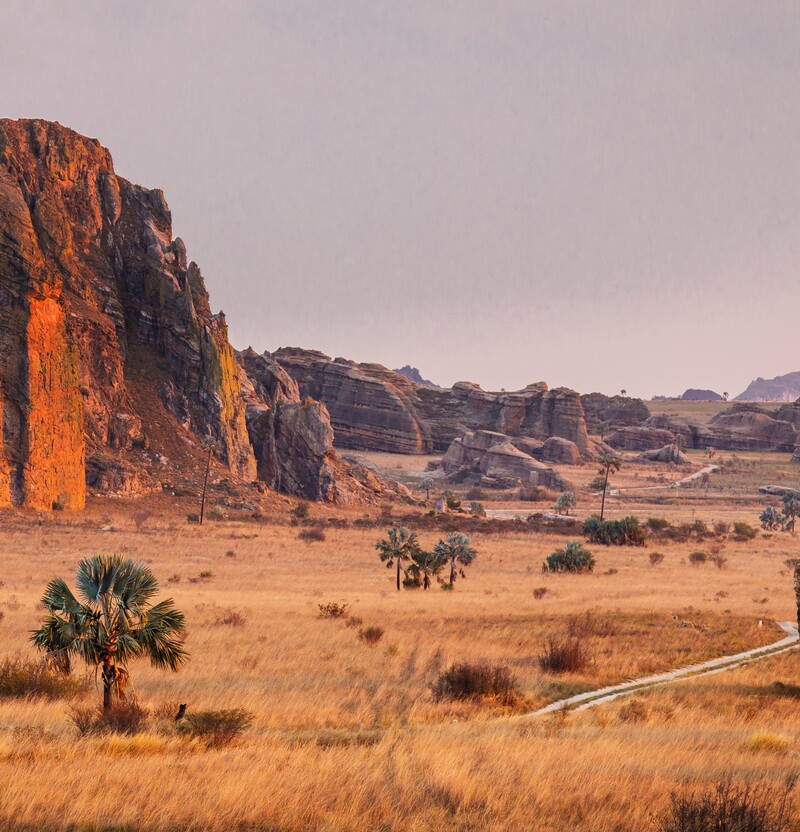
A bit further south lies Isalo National Park, a landscape shaped by the contrast between arid desert and lush dry forest. Nicknamed the “Malagasy Colorado,” this park is reminiscent of the American Wild West, with rock formations dating back over 150 million years. Desert sandstone landscapes blend with savannah, contrasted by deep green canyons and several rivers forming natural pools. The park's flora includes 400 species, many of which are endemic, such as the vontaka, Catharanthus ovalis, and the Isalo palm. The area’s biodiversity attracts many animals, including the Malagasy paradise flycatcher, ring-tailed lemur (Lemur catta), red-fronted brown lemur, Mantella expectata (a type of frog), Furcifer oustaleti (a chameleon), hamerkop, black kite, cattle egret, and the Madagascar buzzard.
At the extreme south of the island, in the Anosy region, discover Andohahela National Park. Three ecosystems coexist across its 76,020 hectares: a humid forest in the east, a spiny bushland in the southwest, and a transitional forest between the two.
Fly to Madagascar